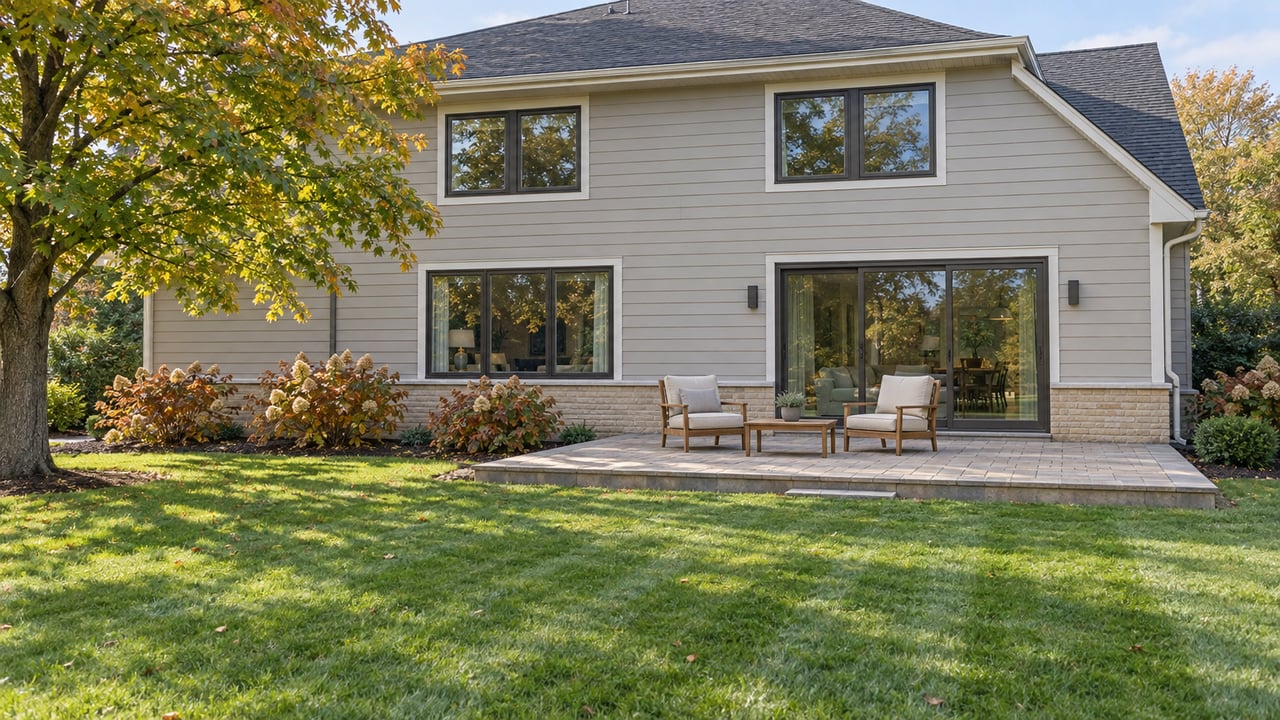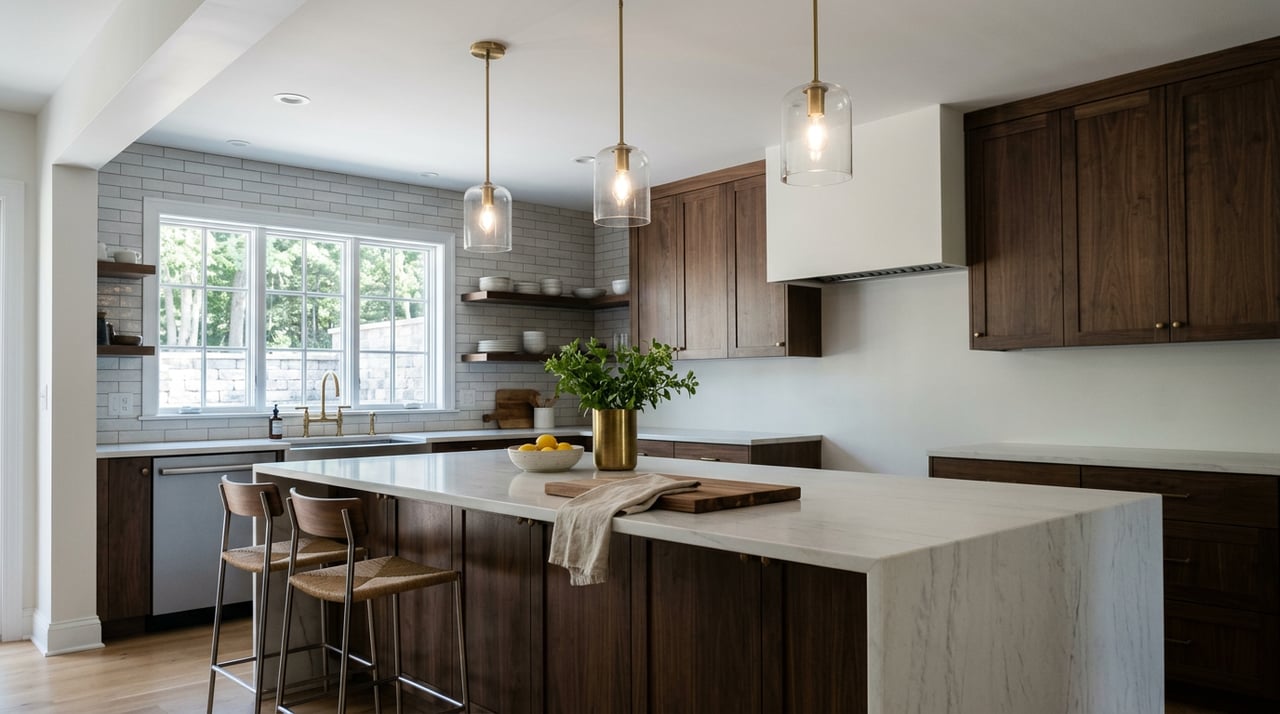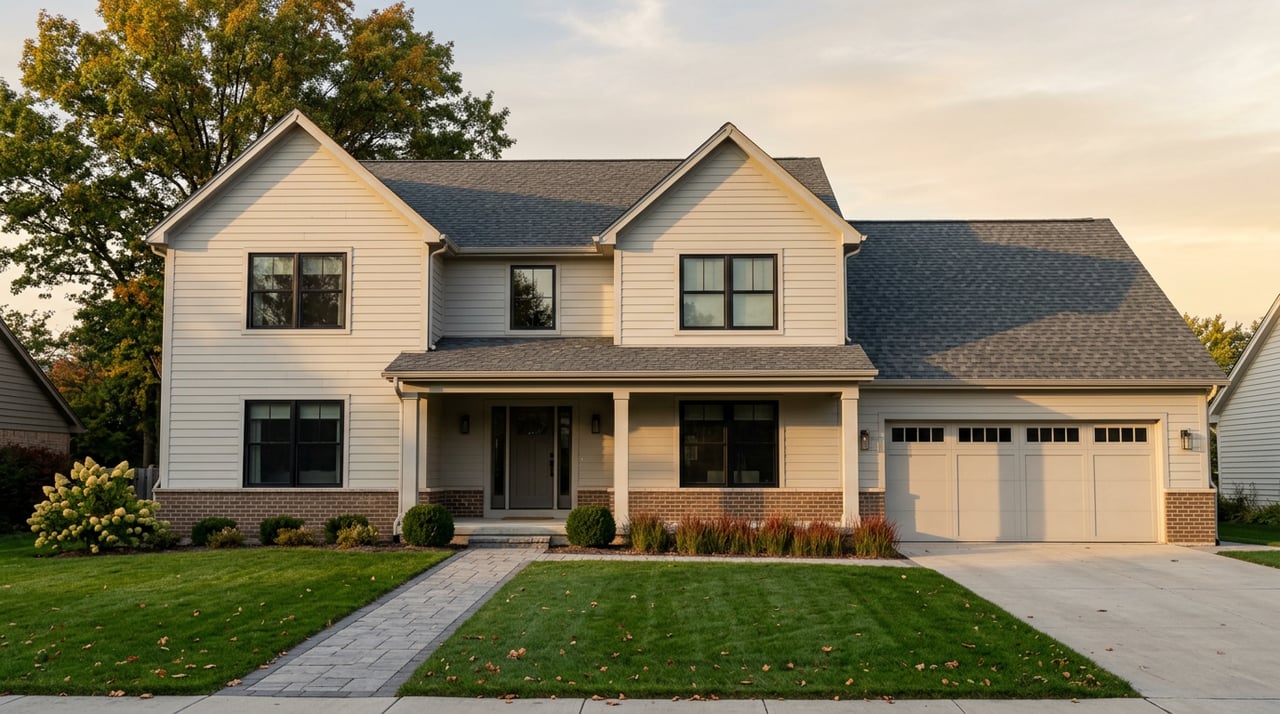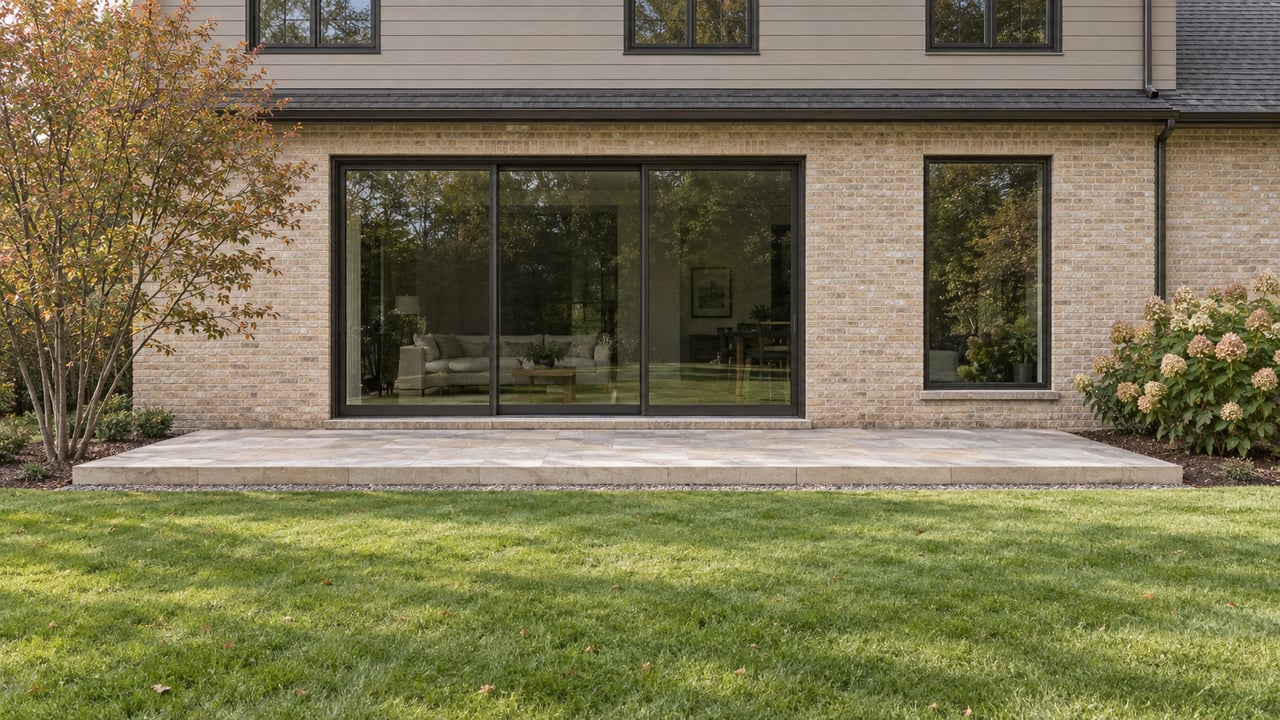
A brand-new ranch duplex going up in Orland Park's Sandburg neighborhood right now is marketed with a line most buyers would not expect to see under that name: it feeds Lemont schools, not Orland Park's own elementary district, and not Carl Sandburg High School, the building the neighborhood is named after. The home carries an Orland Park mailing address. The classroom assignment belongs to a different town entirely.
That's the kind of detail a single median price will never tell you, and Orland Park's median price is doing a lot of hiding. The village reports one number to the portals. Underneath it sit at least two distinct housing markets, split by a boundary that has nothing to do with the village limits.
One Village, Two Zip Codes, Two Very Different Numbers
Orland Park is covered by two zip codes, 60462 and 60467, and they don't behave like halves of the same market. As of August 2026, the median home value in 60462 was $348,900, with a median household income of $96,526. As of July 2026, the median home value in 60467 was $411,700, with a median household income of $114,812. That's a roughly $63,000 gap in home value and an $18,000 gap in income between two zip codes that both say "Orland Park" on the mailbox.
The gap isn't only about money. It's about who is actually deciding where your kids go to school.
Zip code 60462 sits inside six separate school jurisdictions: the Southwest Cook Cooperative Special Education district, Kirby School District 140, Orland School District 135, CCSD 146, Consolidated High School District 230, and a handful of private options. Zip code 60467, by contrast, falls entirely inside Orland School District 135. One zip code is a patchwork. The other is one clean line.
| Zip 60462 | Zip 60467 | |
|---|---|---|
| Median home value | $348,900 (Aug 2026) | $411,700 (Jul 2026) |
| Median household income | $96,526 | $114,812 |
| School district coverage | Six overlapping districts | One district, start to finish |
Village-wide, Orland Park's median listing price was reported at $435,000 in September 2026, with a median price of $210 per square foot. That number is an average of two very different stories, and neither one alone explains it.
The New Construction That Skips Orland's Own School District
The cleaner half of the village, 60467, is also where most of the newest building is happening, and it's where the story gets more complicated than "newer costs more."
Waterford Pointe Villas, a community of high-end, maintenance-free ranch townhomes at the northeast corner of Wolf Road and 153rd Street, is currently listing base prices starting at $699,000. That's not an outlier by mistake. It's a deliberate downsizing product aimed at buyers who want an Orland Park address without giving up square footage or finish level.
A few blocks away, in the section of the village marketed as the Sandburg neighborhood, new construction is going up in the Gleneagles community, and the listing copy is explicit that it feeds Lemont school system, not Orland School District 135 and not the Consolidated High School District 230 boundary that includes Carl Sandburg High School itself. The trailing twelve-month median sale price for homes in that Sandburg-branded pocket runs around $477,000, down about 1% from the prior twelve months.
So a buyer comparing two new-construction listings, both carrying an Orland Park address, both in roughly the same price band, can end up enrolling their kids in two completely different school systems depending on which side of an invisible line the lot sits. Nothing about the zip code, the village name, or the neighborhood's own name tells you which side you're on. Only the attendance boundary does.
Meanwhile, M/I Homes is building inside Orland Park under its Metro East plans, with entry points well below either the Waterford Pointe or Sandburg-area price points. The spread between what "new construction in Orland Park" can mean, from an entry-level attached plan to a $699,000 luxury ranch townhome, is wide enough that the phrase alone tells a buyer almost nothing about what they're going to get, or where they'll send their kids to school.
Downtown Adds a Third Market Inside the Same Village
The east-west zip code split isn't the only fracture. Downtown Orland Park behaves as its own small, thin market layered on top of everything else.
Over the three months ending in May 2026, homes in Downtown Orland Park sold at a median price of $366,000, up 12.7% year over year, at a median of $206 per square foot. Compare that to the village-wide median sale price of $385,000 over the same trailing three months, and downtown reads as a discount. But only three homes sold there in May 2026, down from four the year before. A market that thin means a single high or low sale can swing the median by tens of thousands of dollars the following month. Homes downtown also took a median of 52 days to sell, compared to 44 days village-wide, a gap that likely has more to do with a smaller, older housing stock turning over slowly than with weak demand.
None of this shows up if you only look at the one number Orland Park reports as a whole.
What This Means If You're Comparing Orland Park to Other Suburbs
The pattern across all three of these pockets, east side, west side, and downtown, is the same. Orland Park's price varies most where the school district picture stops being simple. The zip code with the highest income and the highest home value, 60467, is also the one where a buyer can look up a single district and know exactly where their child will attend school for the next thirteen years. The zip code with the more fragmented school coverage, 60462, is the one with the lower median value, even though it includes some of the village's most established, closer-to-downtown streets.
And even inside the clean zip code, a neighborhood carrying the Sandburg name, evoking the high school most people assume it feeds, can turn out to route to a different town's district altogether. That's not a flaw in the data. It's a reminder that in a village this size, the school boundary and the municipal boundary are not the same line, and a buyer who assumes otherwise is making a $400,000 to $700,000 decision on an assumption nobody actually confirmed.
If you're comparing Orland Park against other Southwest Chicagoland suburbs on price alone, the number you're comparing is an average of markets that don't behave alike. The more useful question isn't "what does Orland Park cost." It's which side of which line a specific address sits on, and whether that line matches the one you're assuming.
If you want that lined up correctly before you write an offer, The Randi Lynn Group can pull the actual attendance boundary for any Orland Park address you're considering and show you what that same budget looks like on both sides of the village's real dividing line.