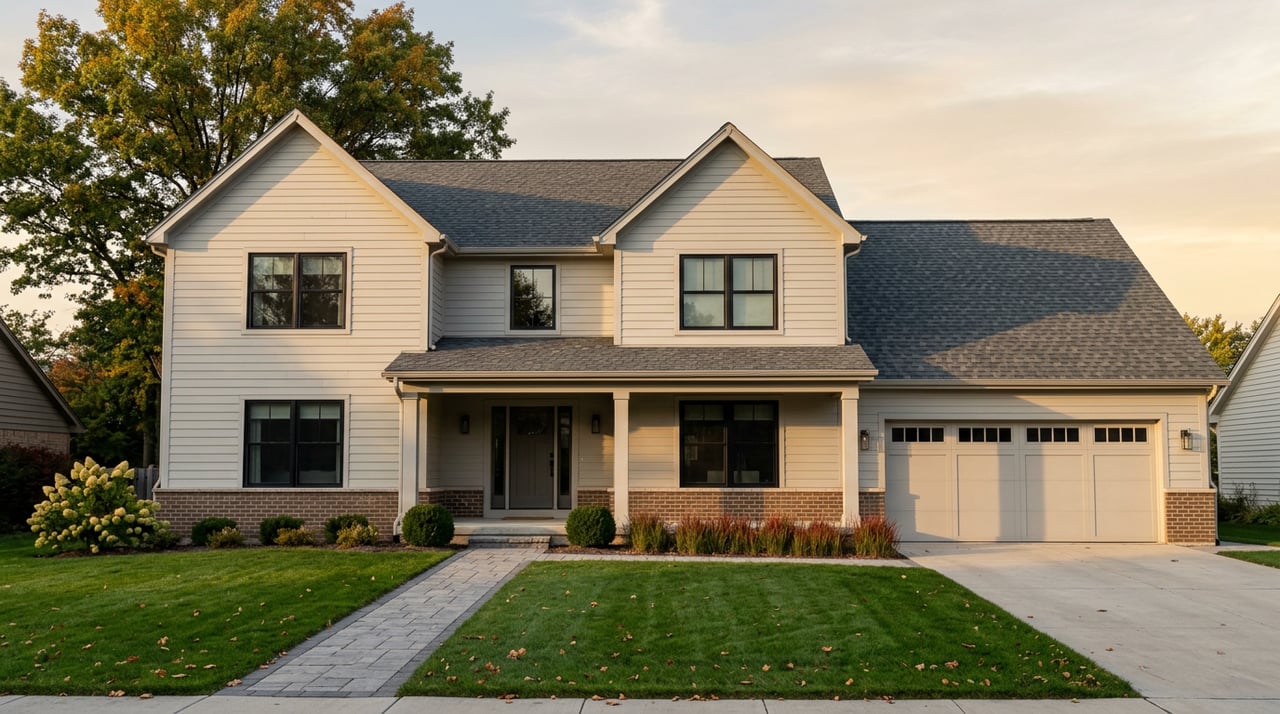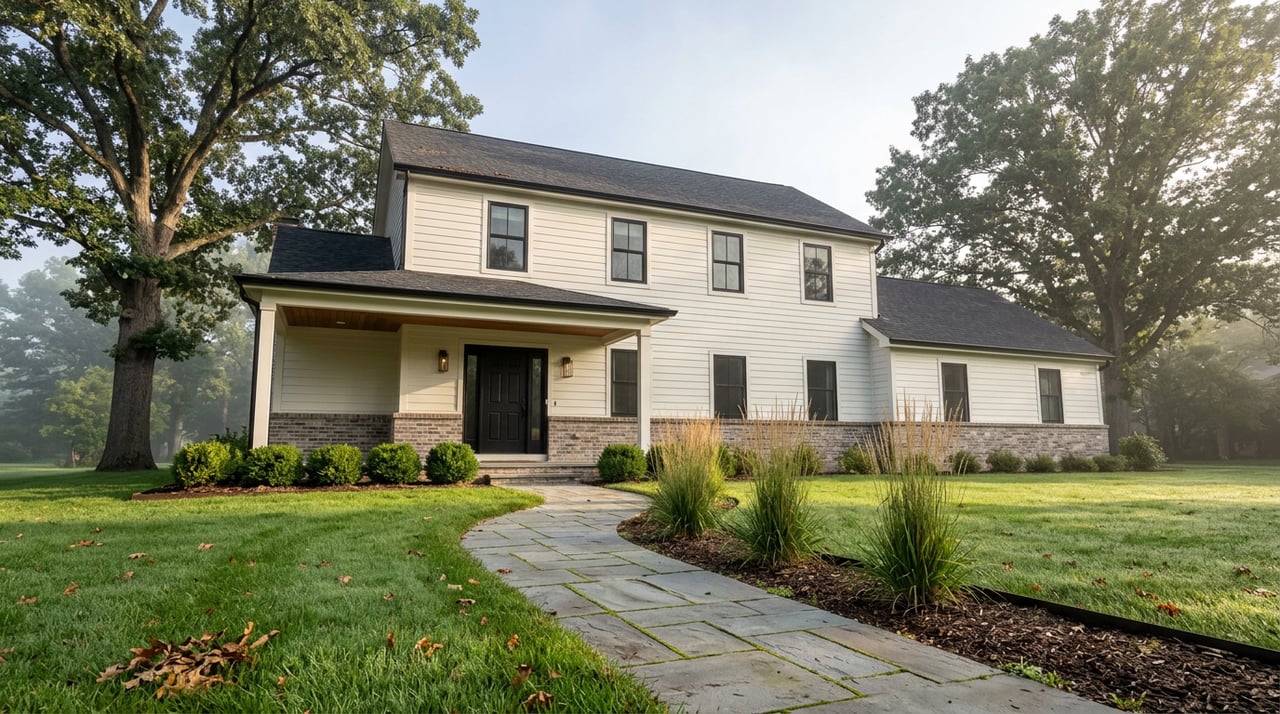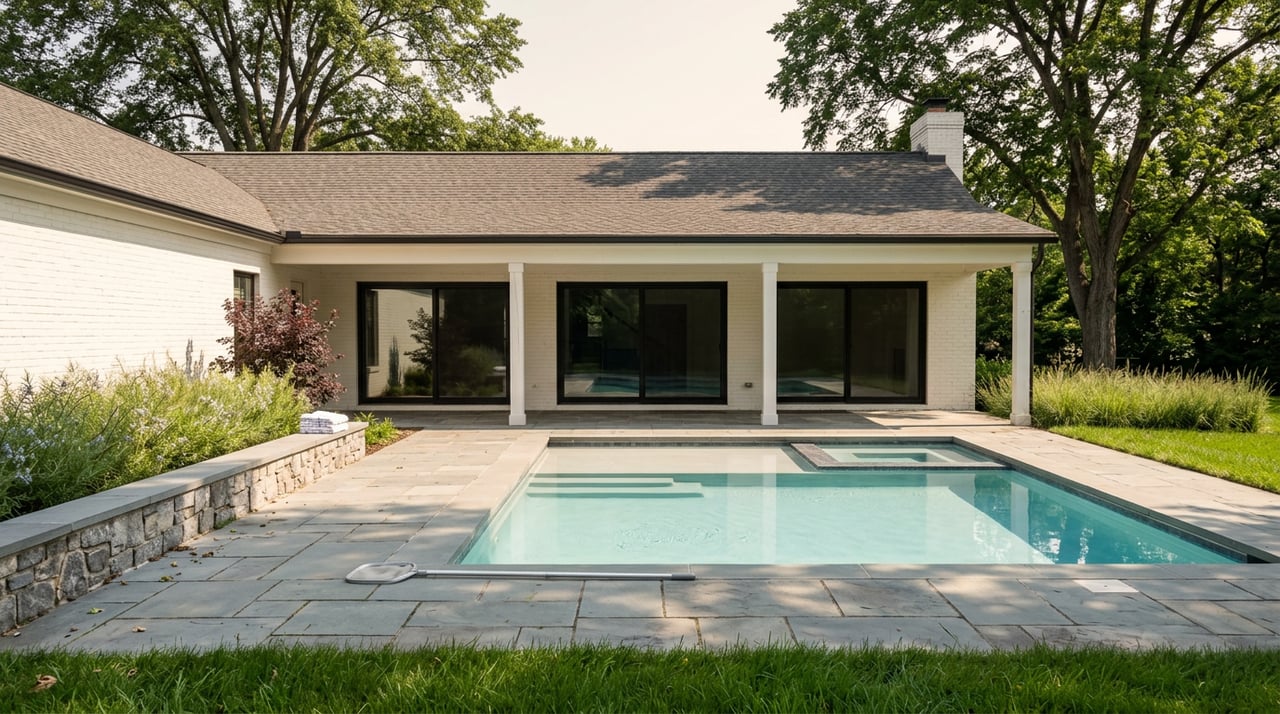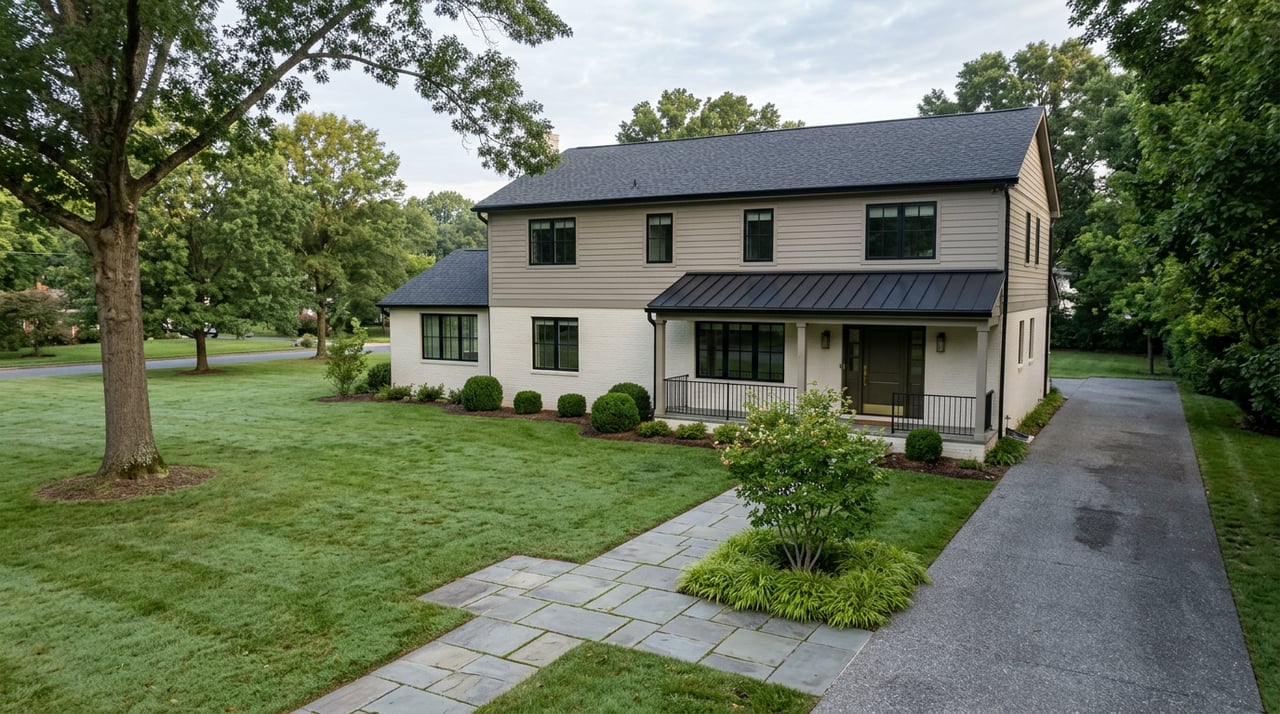
Which county is this house actually in? It sounds like a formality, the kind of detail a title company sorts out during closing. For a buyer comparing Tinley Park to Frankfort or Mokena, it turns out to be the single most consequential question on the spreadsheet, and most people answer it with an assumption instead of a lookup.
The assumption goes like this: Cook County means higher taxes, Will County means lower ones, so a move from Tinley Park to a Will County suburb is a tax break by definition. It's a reasonable shortcut. It's also wrong in exactly the place where a lot of Southwest Chicagoland buyers are shopping right now.
The Village Says It Straddles Two Counties
Tinley Park's own finance department states it plainly on the property tax page of the village website: the village straddles both Cook and Will counties, and real estate tax information depends on where in the village a given property sits. That's not a rounding error or an old annexation quirk nobody updated. It means two houses on the same street, in the same subdivision, can be billed under two entirely different county systems, with different assessment cycles, different classification rules, and different effective rates.
Cook County reassesses on a triennial cycle and applies its own classification system to residential property. Every other Illinois county, including Will, assesses at 33 and a third percent of market value under a different schedule entirely. Those aren't cosmetic differences. They produce different growth patterns in assessed value year over year, even when the underlying home prices are moving in lockstep.
What the Numbers Actually Show
Here's where the assumption breaks. Current property tax data for Tinley Park, pulled separately for its Cook County parcels and its Will County parcels, shows this:
| Cook County side | Will County side | |
|---|---|---|
| Median effective tax rate | 2.56% | 2.96% |
| Median annual tax bill | $6,827 | $12,475 |
| Median home value | not separately reported | $424,311 |
The Will County side of Tinley Park doesn't just carry a higher rate. It's attached to homes worth roughly $150,000 to $200,000 more than the typical Cook County parcel in the same village, which means the actual dollar gap on the tax bill is closer to $5,600 a year, not the rounding-error difference you'd expect if "Will County is cheaper" held true here. It doesn't.
Same Zip Code, Different Bill
The zip codes don't save you either. Tinley Park's two main zips, 60477 and 60487, each contain parcels on both sides of the county line, and the rate you land on depends on which side, not which zip.
In 60477, the Cook County portion carries an effective rate around 2.70 percent. The Will County portion of that same zip runs 2.83 percent. In 60487, the spread is wider: 2.48 percent on the Cook side against 2.96 percent on the Will side. A buyer who filters listings by zip code and assumes uniform tax treatment is working from incomplete information, because the zip code was drawn by the postal service, not the county assessor.
It's Not Just a Tinley Park Quirk
This matters beyond one village. Frankfort, a few miles southwest and generally treated as the Will County alternative to Cook County suburbs, has the same kind of split. Its Will County majority carries a median effective rate around 2.82 percent. But Frankfort also has a smaller footprint inside Cook County, where the effective rate runs closer to 3.44 percent, higher than either side of Tinley Park.
So the pattern flips depending on which town you're looking at. In Tinley Park, the Will County side is the expensive one. In Frankfort, the Cook County sliver is the expensive one. The reliable variable isn't the county's reputation. It's the specific parcel and which taxing bodies, school district, park district, fire protection district, actually overlap it. A buyer who picks a town based on "Will County equals lower taxes" is applying a rule that doesn't hold consistently even within the two towns most likely to get compared to each other.
What's Actually Changing on the Ground
None of this happens in a vacuum. Tinley Park's downtown corridor has real construction dates attached to it right now. The Oak Ridge subdivision, built by D.R. Horton on the former Panduit Corp. headquarters site near Ridgeland and Oak Forest avenues, is adding 81 detached single-family homes and 162 townhomes along with a three-acre public park, with proximity to the Metra station and Freedom Pond Park built into the pitch. A dual-branded Marriott property, a 125-room Courtyard Inn and a 118-room Residence Inn, broke ground near downtown, with the Residence Inn opening in August 2026 and the Courtyard Inn still under construction. The New Bremen Tax Increment Financing district, an 89-acre zone with 275 tax parcels, was created to fund another two decades of infrastructure and redevelopment work downtown after the previous TIF ran out of runway.
None of that changes which county collects your check. It does mean the value proposition on either side of the line keeps shifting, and a buyer weighing "cheaper house, higher rate" against "pricier house, lower rate" should know the neighborhood is actively adding amenities on both sides of that split, not just one.
What the Different Price Bands Actually Buy
Inside Tinley Park itself, the housing stock spreads across a wide range, and the price band tells you almost as much as the county line does. Historic homes near the Oak Park Avenue Metra station, many built between the early 1900s and 1970s in the village's original downtown footprint, typically run $270,000 to $380,000. Split-level homes from the later 20th century, with attached garages and lower-level living space, cluster around $325,000 to $429,000. Townhomes, including the Brookside Glen community, span a wider range from roughly $239,000 up to $519,000 depending on age and finish level. Newer two-story construction near developments like Oak Ridge lands in the high $600,000s.
Run the math across a full carrying cost, mortgage plus tax plus insurance, and a lower-priced home on the higher-rate side of the county line can land close to the same monthly number as a pricier home on the lower-rate side. That's the whole point of checking the actual bill instead of trusting the county name on the listing.
The Only Way to Actually Know
Ask which county a specific address is billed under before you compare it to anything else. Don't extrapolate from the town, the zip code, or even the block. The village's own property tax page links directly to both the Cook County Assessor and the relevant Will County resources depending on where a parcel falls, and that's the only reliable starting point.
FAQ
How do I find out which county my Tinley Park address falls in? Tinley Park's finance department maintains a property tax page that routes residents to the correct county resource, Cook or Will, based on the specific parcel. That's the most direct way to confirm before you assume.
Why would a zip code split between two counties? Zip codes are a postal service construct built around mail delivery routes. County lines are legal and taxing boundaries. The two were never designed to match, and in border villages like Tinley Park, they don't.
Does this same split show up in other Southwest Chicagoland towns? Frankfort has a comparable pattern, with a Will County majority and a smaller Cook County portion that actually carries the higher effective rate, the reverse of what happens in Tinley Park. The lesson holds across both: check the parcel, not the reputation.
Does the county affect anything beyond the tax bill? It can affect assessment cycles, appeal deadlines, and which board reviews a dispute. Cook County reassesses on a triennial schedule with its own classification system. Will County follows the standard statewide schedule. Buyers planning to appeal an assessment down the road should know which process applies before they need it.
If you're comparing a house in Tinley Park against one in Frankfort or Mokena and the sticker prices alone aren't telling you the full story, that's exactly the kind of math Randi Lynn Group runs before a client ever writes an offer. Between Jessica Diaz's financing background and a working knowledge of exactly where these county lines fall, we can tell you what a specific address actually costs to carry, not just what it costs to buy. Reach out for a free home valuation and a real number instead of a guess.