If you are eyeing land around Manhattan, IL, it is easy to focus on acreage first and details later. In reality, the smartest land decisions here start with zoning, access, and buildability long before you think about a dream home, hobby farm, or long-term hold. When you understand how village rules, county rules, and site constraints work together, you can spot real opportunity and avoid expensive surprises. Let’s dive in.
Why Manhattan Land Draws Attention
Manhattan is a growing village, with an estimated population of 10,943 as of July 1, 2025, up from 9,385 in the 2020 Census. The village also has an 88.3% owner-occupied housing rate, a median owner-occupied home value of $332,600, and a median household income of $128,522. For many buyers, that points to a market shaped by owner-users and long-term homeowners rather than short-term speculation alone.
Location also adds to the appeal. A 2024 Village of Manhattan request for qualifications for a comprehensive land-use plan update described the village as about 9 miles southeast of Joliet with access to I-80, I-57, I-55, and I-355. That regional access matters when you are evaluating convenience, future flexibility, and the broader pull of the area.
Just as important, both the village and Will County are actively planning for the future. Manhattan is reviewing future densities, road networks, future land uses, and the relationship between the natural environment and economic health. Will County’s ongoing Guide Will planning initiative is also focused on housing and development, agriculture and rural character, transportation and infrastructure, open space, and regional coordination.
Start With Village or County
Before you evaluate price, shape, or size, find out whether the parcel is inside the Village of Manhattan or in unincorporated Will County. That one detail can change the zoning framework, lot standards, permitting path, and overall use options. It is one of the most important first filters for land around Manhattan.
Inside Manhattan, the A-1 Agricultural district is designed to support land suited to agriculture and to allow horses or other large animals. It permits one farm homestead for each 40 acres of land area, and livestock or poultry buildings must be at least 300 feet from adjacent residences or residential subdivisions. That is a very different use pattern than a standard suburban lot.
In unincorporated Will County, residential minimum lot sizes vary widely by zoning district. Minimum lot areas range from 215,000 square feet in E-1 to 10,000 square feet in R-5 and R-6. In rough acreage terms, that spans from about 4.9 acres down to about 0.23 acres.
What Lot Size Can Mean
A parcel’s acreage alone does not tell you much unless you pair it with zoning. Around Manhattan, land can function as a suburban homesite, a rural residential parcel, an estate-style tract, or a true agricultural holding depending on where it sits and how it is classified. Two parcels with the same number of acres can have very different practical value.
Here is a simple snapshot of Will County residential minimum lot areas in unincorporated areas:
Zoning District | Minimum Lot Area | Approximate Acres |
|---|---|---|
E-1 | 215,000 sq. ft. | 4.9 |
E-2 | 105,000 sq. ft. | 2.4 |
R-1 | 60,000 sq. ft. | 1.4 |
R-2 | 40,000 sq. ft. | 0.9 |
R-2A | 30,000 sq. ft. | 0.7 |
R-3 | 20,000 sq. ft. | 0.46 |
R-4 | 12,500 sq. ft. | 0.29 |
R-5 / R-6 | 10,000 sq. ft. | 0.23 |
This is why a zoning-first review matters so much. If your goal is a custom home, equestrian setup, or future land strategy, you need to know what the district allows before you fall in love with the parcel.
Access Can Make or Break Value
One of the most overlooked issues in land buying is access. Manhattan’s subdivision code says all lots must abut a publicly dedicated street. The same code also notes that double-frontage and reverse-frontage lots should be avoided except in limited cases, and that some lots may need added width, depth, or setbacks depending on their location.
That means frontage is not a minor technical detail. A parcel may look attractive online, but if access is awkward or legal frontage is limited, your plans may become harder to execute. For a future homesite, driveway placement, road access, and usable layout all deserve close review.
Lots on corners or lots facing major thoroughfares can also come with added design considerations. In some cases, these site details affect where a house, barn, outbuilding, or entrance can realistically go. That can directly impact function, cost, and resale appeal.
Utilities and Septic Need Early Review
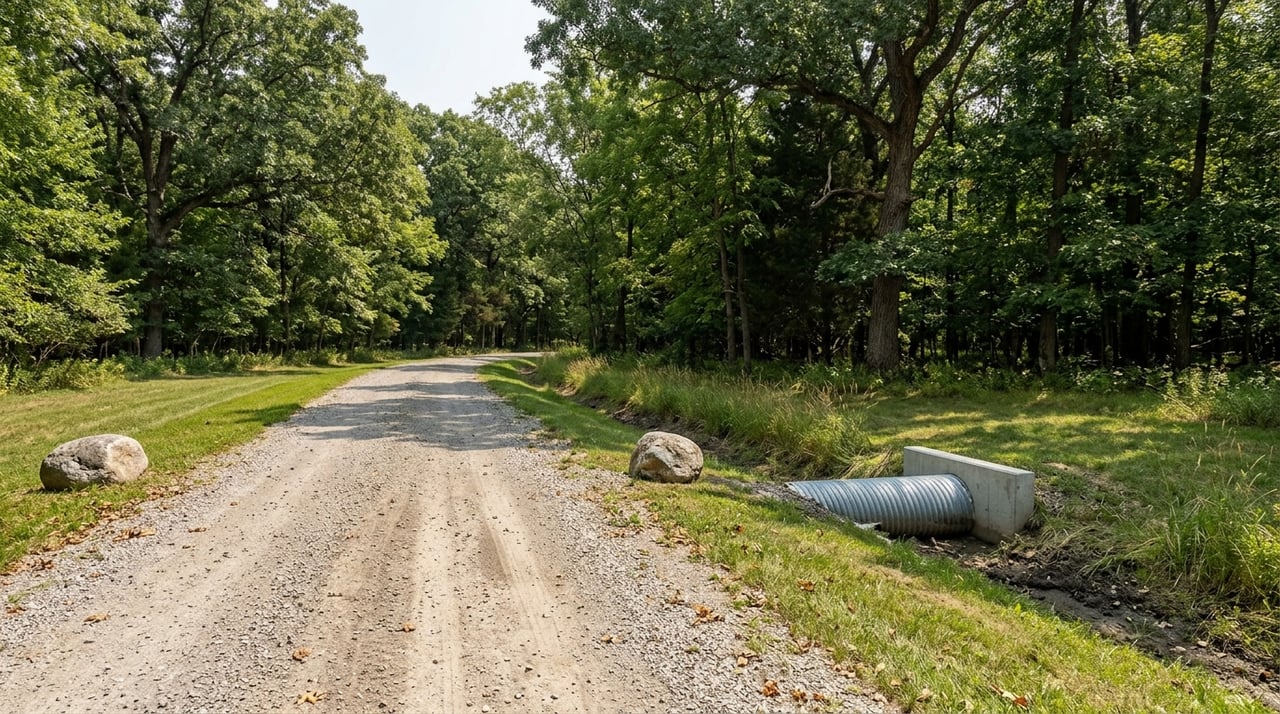
For land outside more built-up areas, utility questions should move to the top of your checklist. If a parcel does not have public water and sewer, you may need private well and septic solutions. That can affect both budget and buildability.
Will County’s subdivision ordinance states that the Health Department must review private water supply and individual septic fields. Wells also must be installed under Illinois Department of Public Health permit requirements and state water well rules. Illinois Extension also notes that soil evaluations are increasingly used to assess septic suitability.
This is where buyers sometimes run into surprises. A parcel can be large enough on paper but still create challenges if soils, septic placement, or water service do not line up with your intended use. Early due diligence helps you understand whether the land supports your plan in a practical way.
Floodplain and Wetlands Matter
Environmental constraints are another major piece of the puzzle. Manhattan’s Lowland Conservancy Overlay District prohibits development activity within 100 feet of streams, lakes, ponds, wetlands, or depressional areas. The setback also cannot be less than the FEMA 100-year floodway boundary, except for limited special-use activities supported by a qualified professional report.
For buyers, this means usable land area may be smaller than the parcel size suggests. A site with wetlands, flood-related restrictions, or depressional areas may still have value, but its build envelope and flexibility could be more limited. That matters whether you are planning to build soon or hold land for the future.
It also reinforces why maps and marketing remarks are not enough. A proper review should confirm whether overlays or flood-related restrictions affect the property before you make assumptions about what can be built.
Match the Parcel to Your Goal
The best land opportunities are usually the ones that align clearly with your intended use. Around Manhattan, that starts with asking what you want the property to do for you over the next several years. A great parcel for one buyer may be the wrong parcel for another.
Future Homesites
If you are buying land for a custom home, start with frontage, zoning, utilities, and septic or well feasibility. A parcel that looks ideal by size may still lose a lot of usable area because of access limits, setbacks, soil conditions, or floodplain issues. Buildable land is about function, not just acreage.
Hobby Farm or Equestrian Use
If you want space for horses or agricultural use, pay close attention to the A-1 Agricultural district in Manhattan. That district specifically contemplates horses and other large animals, and its one homestead per 40 acres rule shows that it is built for true rural use. This is important if you want land that supports lifestyle use beyond a standard residential lot.
Long-Term Holding Strategy
If you are thinking long term, flexibility matters. Parcels with strong road access, fewer environmental constraints, and zoning that aligns with likely future demand may offer more options over time. With Manhattan and Will County both reviewing long-range land use, transportation, housing, agriculture, and open space priorities, policy direction should be part of your thinking from day one.
A Practical Land Due Diligence Checklist
Before you move forward on land around Manhattan, keep this checklist in front of you:
- Is the parcel inside the Village of Manhattan or in unincorporated Will County?
- What zoning district applies to the parcel?
- Is there a floodplain issue, overlay district, wetland, or depressional area affecting usable land?
- Does the parcel have legal street frontage and realistic access for a driveway or permit?
- Is public water and sewer available, or will you need a private well and septic system?
- Have soils or septic suitability been reviewed if the property will rely on private systems?
- Is the land affected by an agricultural area status or another condition that could limit flexibility?
- Does the parcel’s zoning actually support your intended use now, not just your hoped-for use later?
Why Local Guidance Matters
Land is one of the easiest property types to misread because the value is tied to what the site can realistically support. Around Manhattan, the line between a straightforward parcel and a complicated one often comes down to zoning, frontage, utilities, and environmental conditions. Small details on paper can lead to very different outcomes in practice.
That is why local context matters so much. When you understand how village rules, county standards, and land-use planning fit together, you can evaluate opportunities with more clarity and confidence. The goal is not just to buy land, but to buy land that fits your vision and holds its value through smart decision-making.
If you are weighing acreage, a future homesite, or a land purchase with long-term upside, working with a team that understands both presentation and property function can give you a real edge. For strategic guidance on land opportunities around Manhattan, connect with Randi Quigley.
FAQs
What should you check first when buying land around Manhattan, IL?
- First, confirm whether the parcel is inside the Village of Manhattan or in unincorporated Will County, because zoning rules, lot standards, and use options can change across that boundary.
What zoning issue matters most for Manhattan area land?
- The key issue is whether the zoning matches your intended use, since land around Manhattan can range from suburban homesites to rural residential parcels to agricultural holdings.
What is the Manhattan A-1 Agricultural district used for?
- The A-1 district is intended for land suited to agriculture and allows horses or other large animals, with one farm homestead permitted for each 40 acres of land area.
Why is access important for land near Manhattan, IL?
- Access matters because Manhattan’s subdivision code states that lots must abut a publicly dedicated street, and site layout can affect driveway placement, setbacks, and overall buildability.
What utility questions should buyers ask about Manhattan area land?
- Buyers should ask whether public water and sewer are available or whether the parcel will need a private well and septic system, since those systems require additional review.
How can floodplain or wetlands affect land in Manhattan?
- Floodplain, wetlands, streams, ponds, and depressional areas can reduce usable land area and limit where development can occur, especially where overlay district rules apply.
Is a large parcel automatically buildable around Manhattan, IL?
- No. A parcel can be large enough by size but still face constraints from zoning, setbacks, access, soils, septic feasibility, or environmental restrictions.
Why are planning updates relevant to long-term land buyers in Will County?
- They matter because Manhattan and Will County are both reviewing future land use, housing, transportation, agriculture, and infrastructure priorities that can shape long-term flexibility and demand.